Protect concrete surfaces from water intrusion, salt damage, and freeze-thaw cycles with penetrating silane/siloxane sealers. This guide highlights five top picks designed to guard driveways, patios, sidewalks, and pavers without altering the natural look of the surface. Each option prioritizes deep penetration, breathability, and durability against deicing salts and weathering.
The following table summarizes the selected products, including brand, a quick protection note, and target surface types.
| Product | Brand | Key Benefit | Target Surfaces |
|---|---|---|---|
| Siloxa-Tek 8500 Ready to Use | Ghostshield | Water-based, DOT approved; strong salt resistance | Concrete, bricks, masonry, pavers |
| Rain Guard Concrete Sealer 1 Gallon | Rain Guard Water Sealers | Easy application; deep penetration; salt and water repellency | All concrete surfaces |
| Rain Guard Concrete Sealer Concentrate 2 Gallon | Rain Guard Water Sealers | Cost-effective, deep penetration; strong water repellency | All concrete surfaces |
| Concrete Sealer Clear Penetrating (Black Diamond) | Black Diamond Stoneworks | Durable, non-film forming; reduces moisture intrusion | Driveways, patios, brick, stone |
| MasonryDefender Concrete Sealer 1 Gallon | MasonryDefender | Clear, penetrating protection; breathable | Driveways, sidewalks, patios |
Siloxa-Tek 8500 Ready to Use – 1 Gallon
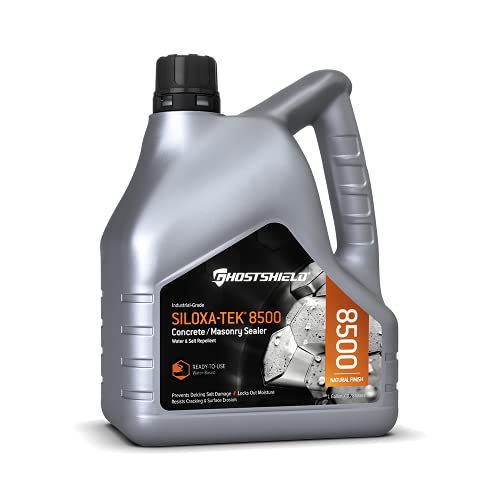
Ghostshield Siloxa-Tek 8500 is a water-based silane/siloxane sealer engineered to reduce water and moisture intrusion while preserving a natural look. The formula is DOT approved, breathable, and non film forming, meaning it will not peel, flake, or delaminate. It resists deicing salts and chloride damage, offers 6x higher actives than typical water-based sealers for long-lasting protection, and reduces surface degradation from freeze-thaw cycles.
Rain Guard Concrete Sealer 1 Gallon

Rain Guard’s 1 Gallon Concrete Sealer provides a ready-to-use, natural finish with deep penetration for water and salt protection. The silane/siloxane formula blocks water absorption, forms visible water beading, and shields surfaces from moisture, cracking, and surface damage for years of durability. It is designed for quick DIY application and broad surface compatibility, including areas exposed to salt spray.
Rain Guard Concrete Sealer Concentrate – 2 Gallons
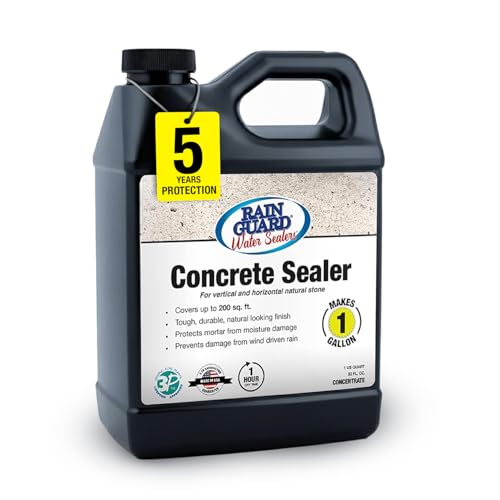
This concentrate yields 2 gallons and delivers easy application with deep penetration. The silane/siloxane formula creates visible water-beading, blocks moisture ingress, and provides long-lasting protection against salt exposure and weathering. It’s suitable for frequent traffic areas like patios and driveways, with durability against salt and wear.
Concrete Sealer Clear Penetrating (Black Diamond)

Black Diamond Stoneworks provides a commercial-grade, water-based penetrating sealer that protects concrete against water, salt, and weather damage. It reduces moisture intrusion, helps prevent cracks and spalling, and is suitable for driveways, patios, pavers, brick, grout, and natural stone. The result is a durable, long-lasting shield without altering color or gloss.
MasonryDefender Concrete Sealer – 1 Gallon
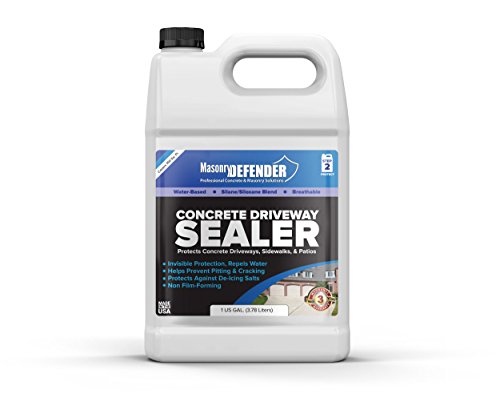
MasonryDefender offers a clear penetrating sealer providing invisible protection for driveways, sidewalks, and patios. The breathable silane/siloxane formula beads water while allowing the surface to breathe, helping guard against moisture-related issues like pitting, cracking, freeze-thaw cycles, and efflorescence.
Buying Guide: Key Considerations For Salt and Freeze-Thaw Protection
Penetration and Breathability
Choose penetrating sealers (silane/siloxane blends) that are breathable. Breathability allows moisture to escape, reducing the risk of white efflorescence and surface damage from trapped moisture during freeze-thaw cycles.
Salt and Chemical Resistance
Look for formulas explicitly designed to resist deicing salts and chloride ions. A higher active content generally indicates deeper penetration and longer-lasting protection against salt-induced damage.
Color and Surface Finish
Most penetrating sealers are clear and non-film forming, preserving the natural look of concrete. If you prefer a subtle sheen, verify that the product remains non-yellowing and does not alter color over time.
Application and Coverage
Consider ready-to-use versus concentrate options. Concentrates are cost-effective but require mixing and additional equipment. Ensure the product’s coverage per gallon matches your project size to estimate number of coats and total cost.
VOC Content and Environmental Impact
Many modern sealers are low VOC or VOC-free, reducing odor during application and limiting environmental impact. This can be important for DIY projects in residential spaces.
Surface Compatibility
Check compatibility with your concrete type (new pours, aged concrete, pavers, brick, or stone). Some formulas target only concrete while others are suitable for masonry surfaces as well.
Durability and Maintenance
Durability against foot or vehicle traffic, cleaning, UV exposure, and weather cycles varies by product. Look for long-lasting formulas and guidance on reapplication intervals to maintain protection.
Safety and Handling
Read safety data and wear appropriate PPE during application. Some products are DOT approved or designed for low odor and safer handling in residential settings.
Multiple perspectives exist when selecting a concrete sealer for salt-prone environments. If you require ultra-deep penetration with DOT-approved credentials, penetrating silane/siloxane sealers are a strong option. For DIY convenience and visible protection, consider ready-to-use sealers, but ensure the formulation supports salt resistance. For large areas, concentrates may offer substantial cost savings while delivering comparable protection when properly mixed and applied. Always follow manufacturer guidelines for surface preparation and cure times to maximize performance in freeze-thaw conditions.