Choosing the right concrete epoxy for rebar is crucial for secure anchoring in structural applications. The following selections prioritize high strength, dependable cure times, and compatibility with rebar and threaded rods. Each product is designed to provide robust adhesion in concrete, resist moisture, and meet standard building codes where applicable. This guide compares standout options to help you select the best epoxy for your project needs.
Product Overview
| Product | Brand | Key Benefit | Typical Use |
|---|---|---|---|
| AKONA Fast-Setting Anchoring Epoxy | Akona | Moisture-tolerant, fast-drying | Concrete, rebar, bolts |
| PC-Concrete PRO High Strength Anchoring Epoxy | PC Products | Code-compliant, professional grade | Cracked/uncracked concrete |
| DCP Quickmast AE15 Concrete Epoxy | DCP | Rapid cure, strong anchoring | Rebar, threaded rods |
| DCP Quickmast Anchor E | DCP | Extended working time, fast cure | Rebar, rods, crack repair |
| AWF PRO Extended Cure Epoxy Adhesive | AWF PRO | Longer gel time, high strength | Anchoring machinery, dowels |
Below are detailed sections for five products that are highly relevant for rebar anchoring in concrete, followed by a practical buying guide to help you compare options.
Akona Fast-Setting Anchoring Epoxy
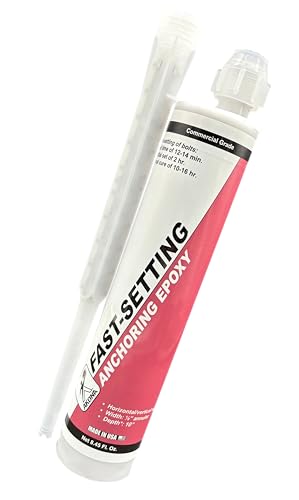
Akona’s fast-setting anchoring epoxy is designed for concrete anchors, including rebar and bolts, with moisture tolerance and solvent resistance. The product promises quick hardening to minimize downtime, with a set time of about 12 minutes and full cure within 16 hours. The unit is aimed at straightforward, no-mess application through a standard caulking tube, helping installers achieve reliable bonds in both dry and damp environments. Its chemistry emphasizes strength and durability for common anchoring tasks in residential and light commercial projects.
PC-Concrete PRO High Strength Anchoring Epoxy

PC Products PC-Concrete PRO is a two-component, professional-grade epoxy system designed for anchoring threaded rods and reinforcing bars into concrete, including cracked and uncracked varieties. It is formulated to meet multiple building and engineering codes, which can be crucial for larger or code-compliant projects. The system suits heavy-duty installations where long-term reliability and rigorous performance are essential, and it supports both hammer-drilled and core-drilled applications depending on the concrete condition.
DCP Quickmast AE15 Concrete Epoxy for Rebar
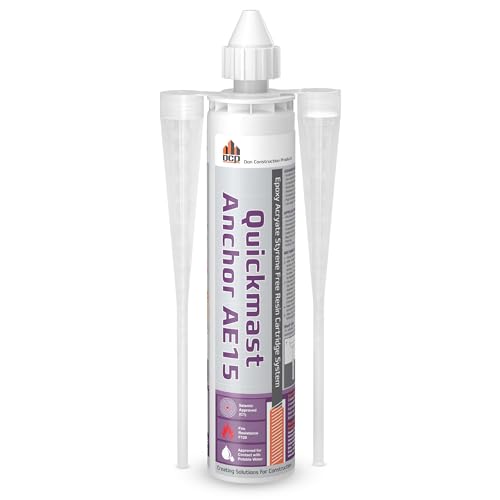
Quickmast AE15 is a two-part acrylate epoxy designed for high-strength anchoring in concrete, ideal for rebar and threaded rods. The kit includes a 10.1 fl oz cartridge and nozzles for easy application with standard caulking guns. It offers a working time in the 4 to 10-minute range and cures rapidly, achieving full load-bearing capacity in 40 to 145 minutes depending on base material temperature. This fast-cure profile helps keep construction timelines tight while delivering a robust bond for structural anchors.
DCP Quickmast Anchor E Concrete Anchoring Epoxy

Anchor E is a two-part, dual-cartridge system designed for rebar and threaded rods in concrete, offering an extended working time of 3 to 20 minutes to place anchors accurately. It also features a rapid curing process that reaches full load capacity within 3 to 24 hours, depending on temperature. This balance of working time and cure speed makes it suitable for projects requiring careful placement without sacrificing progress on the job site.
AWF PRO Extended Cure Epoxy Adhesive
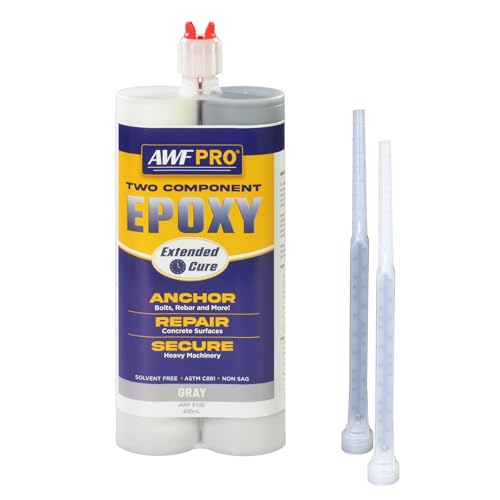
AWF PRO Extended Cure Epoxy Adhesive is designed for anchoring threaded rods and reinforcing bars with a longer gel phase, providing generous working time for precise positioning. It delivers high compressive strength when fully cured, making it suitable for industrial and heavy-duty applications. The product supports various substrates and is appropriate for doweling and grouting machinery, offering versatility across multiple anchoring scenarios in concrete projects.
Buying Guide: Key Purchase Considerations
When selecting a concrete epoxy for rebar anchoring, consider the following factors to ensure the best long-term performance for your project:
- Strength and Bonding: Look for epoxies rated for high-strength anchoring and capable of bonding to rebar in concrete, including cracked or uncracked variants. Two-component systems typically offer robust bonds once cured.
- Working Time vs. Cure Time: Decide between longer working times for precise placement and faster cures to minimize downtime. Some products provide a broad window (e.g., 3–20 minutes) with full cure within hours.
- Moisture Tolerance: In many construction environments, moisture is present in the concrete or surrounding substrate. Epoxies with moisture tolerance reduce the risk of weak bonds.
- Temperature Range: Consider the expected ambient and substrate temperatures. Cure times and final strength can vary with temperature.
- Code Compliance: For structural or commercial projects, select epoxy systems that meet relevant building codes and standards, ensuring compliance for audits and inspections.
- Application Method: Check cartridge compatibility with standard caulking guns, nozzle options, and whether the system is dual-cartridge or multi-component. This affects installation ease and consistency.
- Size and Coverage: Choose a package size that fits the project scale (single-anchor needs vs. multiple anchors in large jobs). Compress the coverage expectations with the number of rebar or rods to be anchored.
- Versatility: Some products work well for both anchoring and crack repair, offering added value in projects that involve multiple concrete tasks.
- Code Acceptance and Certifications: For public or regulated projects, verify certifications, approvals, and compatibility with code requirements in your region.
Overall, the best concrete epoxy for rebar depends on your project’s balance of budget, required curing speed, environmental conditions, and code requirements. The highlighted options cover a range of common needs—from moisture-tolerant, fast-setting formulas to extended-cure systems that help manage complex installations with multiple anchors.