Protecting rubber roofs from water intrusion and UV damage is essential for longevity and energy efficiency. This guide compares top rubber roof coatings available on Amazon, highlighting application methods, coverage, and flexibility. Each product below helps create a durable, weatherproof seal while accommodating roof movement and temperature changes. Use the buying guide to choose the right membrane type for your roof’s material and slope.
| Product | Type | Key Benefit | Approx. Coverage |
|---|---|---|---|
| Liquid Rubber Waterproof Sealant – 1 Gallon | Bitumen-based liquid rubber | High elongation (over 950%), flexible protection | Flat/low slope: ~15 sq ft per gallon |
| Liquid Rubber Waterproof Sealant – 5 Gallon | Bitumen-based liquid rubber | Same formulation, larger volume for big projects | Flat/low slope: ~15 sq ft per gallon (60-80 mil membrane) |
| RubberTop Roof Coating | Waterproof acrylic & siliconized elastomeric | Lowers interior temperature; versatile application | Varies by surface |
| Liquid Rubber Silicone Roof Coating – White | Silicone roof sealant | UV-stable, high elongation, one-coat option | Approximately 50 sq ft per gallon |
| AMES RESEARCH MSS1 Maximum Stretch Roof Coating | Elastomeric acrylic/rubberized coating | 650% elongation; reflective white finish | Metal/tar/low-slope roofs; brush/roller/spray |
Liquid Rubber Waterproof Sealant – 1 Gallon

Industrial-strength bitumen formula creates a seamless waterproof membrane on flat and low-slope roofs, metal roofs, foundations, and more. It forms a durable barrier against water infiltration where other sealants fail. The product offers superior flexibility with over 950% elongation, maintaining adhesion during building movement and temperature changes. It resists cracking, peeling, and UV damage, delivering a flexible rubberized coating for long-lasting protection. Coverage varies: about 15 square feet per gallon on flat or standing-water surfaces with 3–4 heavy coats to reach a 60–80 mil membrane; foundation surfaces may require 2–3 coats for a 30 mil membrane.
Liquid Rubber Waterproof Sealant – 5 Gallon

This 5-gallon variant uses the same industrial-strength bitumen formula to cover larger areas efficiently. The coating remains highly flexible (over 950% elongation) and adheres through temperature shifts and building movement, offering resistance to UV damage and cracking. Application is brush, roll, or spray on flat/low-slope surfaces (15 sq ft per gallon per coat; multiple coats to achieve the desired thickness). Vertical surfaces like foundations still follow the same multi-coat approach for a durable 30 mil membrane.
RubberTop Roof Coating

Waterproof acrylic and siliconized elastomeric roof coating designed to seal rubber roofs and other substrates. It provides protective waterproofing while helping lower interior temperatures by reflecting heat. The coating is easy to apply via spray, roller, or brush and is resistant to both heat and cold. Suitable for low-slope roofs, metal substrates, and above-grade surfaces, RubberTop offers a flexible seal that holds up under expansion and contraction of roofing materials.
Liquid Rubber Silicone Roof Coating – White

This silicone roof coating provides a UV-stable, highly flexible membrane with over 237% elongation, reducing cracking and adhesion failure caused by thermal movement. No primer is required for many surfaces, and a single coat can seal flat roofs, sloped roofs, metal, wood, concrete, EPDM, and TPO. Coverage guidance suggests roughly 1 gallon per 50 sq ft, with 1–2 layers recommended for thorough protection. Ideal for roofs exposed to sun and weathering thanks to its long-lasting UV resistance.
AMES RESEARCH MSS1 Maximum Stretch Roof Coating
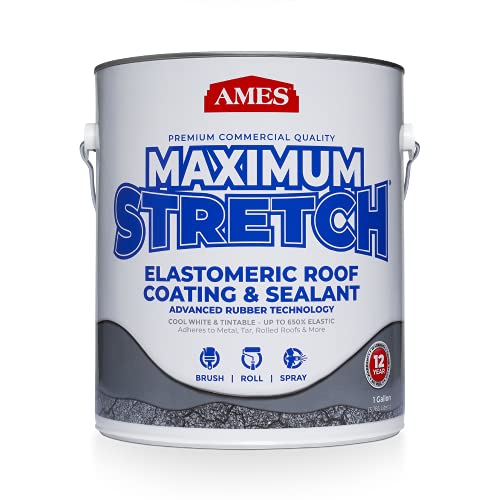
A white elastomeric acrylic coating with 650% elongation to resist cracking and peeling. The reflective finish (88% light reflectivity) reduces surface temperatures and cooling costs. It adheres to metal roofing, tar, and rolled roofs, making it suitable for low-slope applications, RV roofs, and as a general roof sealant. Brush, roll, or spray application is supported, providing versatile options for various roof configurations.
Buying Guide: Key Purchase Considerations
- Roof material compatibility: Rubber, EPDM, TPO, metal, and wood surfaces each respond differently to coatings. Silicone and acrylic elastomerics offer distinct benefits in UV resistance and elasticity; bitumen-based options deliver strong water barriers on challenging substrates.
- Elongation and elasticity: Higher elongation values indicate better flexibility to accommodate roof movement and temperature fluctuations. Choose products with 200–1000% elongation depending on climate and roof type.
- UV resistance and color: Light-colored or reflective coatings reduce heat absorption, potentially lowering cooling costs. White or light tones are common for energy efficiency.
- Application method and ease: Some coatings are brush/roller/spray friendly. Primer requirements vary; some silicone products claim no primer necessary on many substrates.
- Thickness and layering: Membrane thickness is often achieved via multiple coats. Plan the number of coats based on surface type and desired mil thickness (e.g., 30–80 mil).
- Cure time and foot traffic: Drying times affect when the roof can be returned to service. Consider cure time and whether protection is needed for foot traffic shortly after application.
- Maintenance and lifespan: Elastomeric and silicone coatings offer different long-term resilience. UV stability and resistance to weathering contribute to total lifespan and maintenance intervals.
- Environmental and safety considerations: Some products are water-based and low odor, while others use solvent-based formulations. Ensure proper ventilation during application and disposal per product guidelines.
Choosing the right coating depends on roof type, local climate, and maintenance goals. For flat or low-slope rubber roofs, options with high elongation and UV stability tend to perform best over time, while reflective white coatings help mitigate heat buildup in sunny regions. When sealing joints, seams, or vents, consider products with proven elasticity to resist cracks around penetrations. Always follow manufacturer instructions for surface preparation, priming (if required), and coating thickness to maximize performance and longevity.