Choosing the right coating for rough concrete requires considering adhesion, durability, slip resistance, and ease of application. The following selections are designed to perform on porous, uneven substrates while offering protection against moisture, chemicals, and wear. This guide highlights five top options with distinct advantages, from penetrating sealers to durable wear-resistant coatings.
| Product | Brand | Best For |
|---|---|---|
| CC Concrete Coatings SuperSeal 20WB | CC Concrete Coatings | Water-based protection, low odor |
| MasonryDefender All Purpose Brick Stone & Concrete Sealer | MasonryDefender | Penetrating waterproofing |
| ORIENTAL YUHONG Clear Coating | Oriental Yuhong | Transparent, UV-stable sealant |
| KILZ Decorative Concrete Coating | KILZ | Decorative, slip-resistant finish |
| DYCO Court & Floor Anti-Slip Coating | Dyco Paints | ADA-compliant slip resistance |
Surface prep and application details vary by product, so review the manufacturer’s guidance for substrate condition, cure times, and recoat windows. The selections below emphasize performance on rough, porous concrete while balancing ease of use and long-term upkeep.
CC Concrete Coatings SuperSeal 20WB – Water Base Acrylic Sealer

Product overview: This water-based acrylic sealer is designed to seal porous concrete with a satin finish. Its low VOC content and minimal odor make it suitable for indoor spaces and installations where ventilation may be limited. The formulation emphasizes safety and ease of use, reducing volatile emissions compared with solvent-based sealers. It also offers chemical and stain resistance for common household and workshop exposures. Ideal for rough concrete substrates that require a protective barrier without altering the natural texture.
Key features and relevance to rough concrete:
- Safer to use: water-based, low odor, lower VOCs.
- Chemical and stain resistance helps protect rough surfaces from spills and marks.
- One sealer, multiple surfaces: versatile on various porous substrates common in rough concrete installations.
MasonryDefender All Purpose Brick Stone & Concrete Sealer
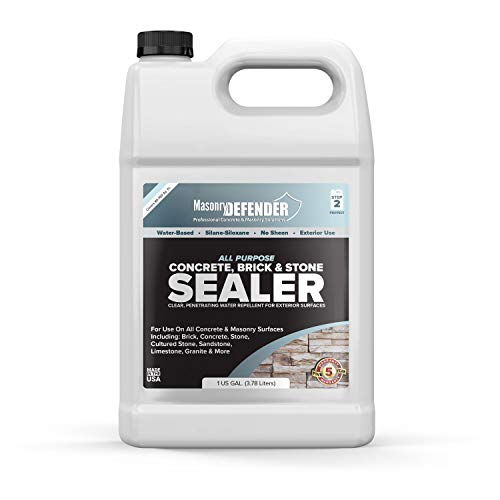
Product overview: This penetrating silane-siloxane sealer is designed to provide deep protection for outdoor masonry, including concrete, brick, and stone. The clear barrier forms a long-lasting, water-repellent film without altering the surface appearance. It’s particularly suitable for rough concrete in exterior settings where weather exposure and moisture infiltration are primary concerns.
Key features and relevance to rough concrete:
- Ultimate protection penetrating sealer: creates a deep barrier against water intrusion and helps extend substrate life.
- Waterproof and clear: preserves the natural look while offering reliable moisture resistance.
- Wide-ranging application and coverage: suitable for concrete, patio stones, limestone, granite, sidewalks, and more.
ORIENTAL YUHONG Clear Coating

Product overview: This clear acrylic-based coating provides UV stability and transparent waterproofing for exterior and interior surfaces. The coating forms a flexible, seamless membrane upon curing, protecting walls and roofs from water ingress without altering the substrate’s appearance. It’s especially useful on rough concrete where a transparent barrier is preferred to maintain texture and color.
Key features and relevance to rough concrete:
- High waterproof shield with an 80% acrylic formula for durable protection.
- Anti-UV and no yellowing to preserve color integrity across seasons.
- Coating sealant coverage: simple application and fast drying; recommend two coats for enhanced waterproofing.
KILZ Decorative Concrete Coating

Product overview: This interior/exterior decorative concrete paint is formulated to brighten and protect concrete surfaces such as driveways, garages, patios, and porches. It’s designed to fill hairline cracks and resist wear from tires, dirt, and weather. The product provides a slip-resistant finish, which is beneficial for outdoor walkways and pool areas where rough texture is present. It’s suitable for rough concrete that benefits from both color and durability.
Key features and relevance to rough concrete:
- Decorative finish with concrete paint that fills cracks and improves durability.
- Slip-resistant surface enhances safety on rough, high-traffic areas.
- Easy application suitable for various concrete environments including outdoor spaces.
DYCO Court & Floor Anti-Slip Coating

Product overview: This anti-slip coating is designed for court surfaces and floors, including concrete and pavement. It exceeds ADA anti-slip standards to reduce the risk of slips in wet or high-traffic areas. The coating’s durability helps maintain a safety surface for years, resisting UV exposure, weathering, and wear on rough concrete substrates often found in sport courts and outdoor walkways.
Key features and relevance to rough concrete:
- Superior adhesion for interior and exterior concrete and asphalt surfaces.
- Exceeds ADA standards for anti-slip performance, increasing safety on rough, textured substrates.
- Long-lasting finish resistant to UV, water, salt, and chemicals.
Buying Guide: Key Purchase Considerations For Rough Concrete
- Surface type and porosity: Rough concrete often requires penetrative sealers or multi-layer coatings to achieve reliable adhesion and moisture protection. Consider penetrating sealers for moisture barriers and decorative coatings for texture-friendly finishes.
- Moisture exposure: For exterior surfaces or areas with high humidity, prioritize waterproofing and UV-stable options to prevent degradation and color fading.
- Slip resistance: If safety is a priority, choose products with slip-resistant formulations or surfaces, especially for outdoor patios, walkways, and pool decks.
- Aesthetic goals: Decide whether you want a natural look to preserve texture or a decorative finish to alter appearance. Clear sealers preserve texture, while tinted or decorative coatings provide color and pattern.
- Application environment: Water-based products are easier to apply indoors with low odors. Solvent-based products may offer stronger penetration but have odor and emission considerations.
- Maintenance and recoat cycles: Some coatings require more frequent reapplication on rough surfaces due to abrasion. Estimate maintenance needs based on foot traffic, vehicles, and exposure to chemicals.
- Bonding and curing: Proper surface preparation (cleaning, repairing cracks, and allowing drying) is crucial for adhesion on rough concrete. Follow manufacturers’ guidelines for pre-wetting, priming, and cure times.
- Longevity and warranty: Compare expected lifespans and any manufacturer warranties to determine long-term value, especially in exterior environments where weathering is a factor.
- Environmental and safety considerations: If low odor and low VOCs are important, prioritize water-based solutions. Check safety data sheets for handling and ventilation guidance.
- Cost vs. performance: Balancing upfront cost with durability and maintenance costs over time helps determine total cost of ownership for rough concrete coatings.
When selecting a coating for rough concrete, consider a layered approach: a penetrating sealant to reduce moisture ingress, followed by a protective topcoat or decorative coating to achieve the desired finish and durability. Always follow surface preparation instructions closely to maximize adhesion and longevity.