When moving patients or loved ones up and down stairs, a reliable chair elevator can be a lifesaver. This guide highlights five top stair evacuation chairs and related mobility aids that prioritize stability, ease of use, and durability. Whether it’s for emergency evacuation, frequent transfers, or home care, these selections aim to support caregivers and responders with clear handles, strong frames, and secure restraints.
| Product | Brand | Model | Capacity |
|---|---|---|---|
| LINE2design EMS Stair Chair 70015-Y | LINE2design | 70015-Y | 400 lb |
| LINE2design EMS Stair Chair – Orange | LINE2design | EMS Stair Chair | 400 lb |
| Manual Lift Stair Chair (DnyioVpl) | DnyioVpl | Manual Lift Stair Chair | 350 lb |
| Manual Lift Stair Chair (GOSHET) | GOSHET | Manual Lift Stair Chair | 350 lb |
| Transfer Sling For Elderly And Disabled Patient Lift | NEPPT | Stair Transfer Belt | 220 lb |
LINE2design EMS Stair Chair 70015-Y

The LINE2design EMS Stair Chair 70015-Y is a two-wheel deluxe evacuation chair designed for medical transfers and ambulance transport. It features a bright yellow frame for high visibility and clear head-end and foot-end lift handles to assist maneuvering. The chair folds compactly for storage and includes rear wheel brakes for controlled descent. A sturdy, black vinyl seat and back rest provide durable seating during transfers. This model supports up to 400 pounds and emphasizes quick deployment in emergency scenarios.
LINE2design EMS Stair Chair – Orange

This orange LINE2design EMS Stair Chair offers a robust aluminum frame with a maximum capacity of 400 pounds. It includes three adjustable straps with quick-release buckles to secure patients and ensure comfort during transfers. Non-slip grips on the front and rear handles assist rescuers in guiding the chair along stairs, making it well-suited for both home care and professional settings. The chair is designed for rapid deployment and reliable control during evacuation procedures.
Manual Lift Stair Chair (DnyioVpl)

The DnyioVpl Manual Lift Stair Chair emphasizes durability with a high-quality aluminum alloy frame and PVC components. Its foldable design compresses to a compact size (about 47.24 x 21.26 x 11.8 inches) for easy car trunk storage or home stowage. The chair supports around 350 pounds, balancing weight capacity with portability. Its design is intended for daily transfers and emergency evacuations, providing a sturdy option for caregivers seeking a dependable manual lift solution.
Manual Lift Stair Chair (GOSHET)
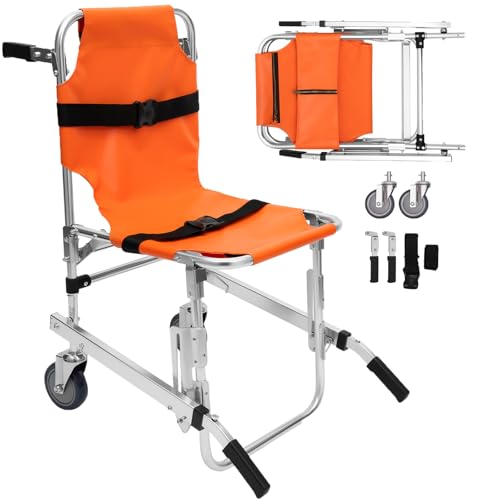
The GOSHET stair chair combines a sturdy aluminum alloy frame with a chrome-plated finish and a high-quality PVC cushion. Folding dimensions are compact, and the seat measures a comfortable 17.32 by 18.5 inches. It accommodates up to 350.5 pounds and features reinforced seams with screws for long-term use. This chair is designed for daily transfers, medical settings, and home use, prioritizing safety and ease of handling during stair navigation.
Transfer Sling For Elderly And Disabled Patient Lift

The NEPPT transfer sling is designed to aid short-distance patient transfers, such as moving from bed to wheelchair or chair to car. It uses multiple handles distributed along its fabric, with reinforced stitching to distribute weight evenly and improve safety. The sling supports up to 220 pounds and includes an additional fixed strap to help secure the patient’s waist and thighs during transfer. While not a traditional chair, it complements stair transfer workflows where patient body positioning is critical.
Buying Guide: Key Purchase Considerations
- Weight capacity: Choose a chair with a load limit that comfortably exceeds the patient’s weight. Consider future needs and potential increases in patient weight over time.
- Stair design compatibility: Look for models with adjustable straps, secure handles, and non-slip grips that perform well on both carpeted and hard stairs.
- Portability and storage: If you have limited space or need to transport the chair, prioritize foldable designs with compact dimensions for easy storage and transport.
- Durability and materials: Aluminum frames offer strength and lightness; vinyl seating is easy to clean. Check for reinforced seams and corrosion resistance in frequent-use environments.
- Safety features: Brakes on rear wheels, quick-release buckles, and multiple handles can enhance control and reduce the risk of accidents during transfer.
- Ease of use: Ergonomic handles, clear instructions, and straightforward folding mechanisms help caregivers perform transfers efficiently, particularly under stress.
- Maintenance: Choose chairs with readily available replacement parts and simple cleaning procedures to ensure long-term reliability in busy settings.
- Environment considerations: If used in ambulances or clinical settings, visibility (bright colors), foot and head end markings, and secure restraints become important for rapid, safe evacuations.
- Alternative aids: A transfer sling or patient lift belt can complement a chair by assisting in positioning and reducing caregiver strain during transfers.
- Cost versus needs: Balance the upfront cost with anticipated usage, maintenance, and the level of emergency readiness required for your setting.