Homeowners dealing with brown recluse spiders often prefer non-chemical, trap-based approaches that minimize mess and exposure. This article profiles five common brown recluse-focused attractants and glue trap systems, explaining how each works, where to place them, and how they fit into a broader spider lockdown plan. All options below rely on non-toxic adhesives and simple positioning to maximize catches while keeping indoor spaces safe for families and pets.
Summary of chosen products:
| Product | Brand | Format | Key Benefit |
|---|---|---|---|
| Catchmaster 15 Brown Recluse Spider Traps (Non-Toxic) | Catchmaster | Glue traps (5 sheets, 15 traps) | Versatile, ready-to-use glue board network |
| Catchmaster Brown Recluse Spider Giant Glue Boards 6Pk | Catchmaster | Giant glue boards | Wider surface for quick ambushes |
| MaxGuard Spider + Insect Traps (12 pcs Box) | MaxGuard | Non-toxic glue traps | Non-toxic, high-attraction interior |
| MaxGuard Mini Spider + Insect Traps (24 pcs Box) | MaxGuard | Mini glue traps | More placement options, same non-toxic formula |
| RESCUE! Spider Traps – 3 Traps | RESCUE! | Triple traps | Two-sided and ready-to-use |
Catchmaster 15 Brown Recluse Traps: Non-Toxic Glue Boards

Catchmaster’s 15-trap configuration uses multiple glue boards to create a broad monitoring network along walls, behind appliances, and in corners where brown recluse spiders commonly travel. The sheets subdivide into smaller traps for flexible placement, making it easy to tailor a layout to room size and traffic patterns. The non-toxic formula is designed for indoor use with minimal residue, providing a practical option for families seeking a low-maintenance solution.
Effectiveness hinges on strategic placement: run traps along pathways and near known harborage zones such as closets, basements, and laundry rooms. Regular inspection helps track activity and adjust positions to maximize captures over time. For households with curious pets or children, placing traps on low-traffic perimeters behind furniture reduces accidental contact while maintaining a strong monitoring presence.
Catchmaster Brown Recluse Giant Glue Boards

Giant glue boards expand the surface area available for catching wandering spiders. These are especially useful in larger rooms, garages, and utility spaces where brown recluse activity might concentrate. The boards are designed for ready-to-use placement without bait, and can be folded into a tunnel-like configuration in cluttered areas to simulate spider harborage. The product is promoted as year-round, pesticide-free control, aligning with households seeking long-term monitoring without chemical treatments.
Hot Shot Spider & Scorpion Killer (Aerosol)

This aerosol provides a fast-acting option for immediate knockdown of large spiders and scorpions, including brown recluse in some contexts. While primarily a contact spray, it complements glue traps by targeting hiding spots and retreat routes that traps may not safely reach. The formula claims extended residual action for up to four months, helping prevent re-infestation when used in conjunction with monitoring traps and routine cleaning practices. Care should be taken to follow label directions, particularly around occupied living spaces and food areas.
MaxGuard Spider + Insect Traps (12 pcs)

MaxGuard’s 12-trap box uses a dark interior and a strong, non-toxic adhesive to attract a wide range of spiders, including brown recluse. The traps are designed to be safe for home use and can capture multiple species that traverse typical indoor routes. Their non-toxic composition makes them suitable for households with kids and pets when placed along walls and behind furniture where pests usually travel. This option is positioned as a straightforward way to increase trap density in problem zones.
RESCUE! Spider Traps – 3 Traps
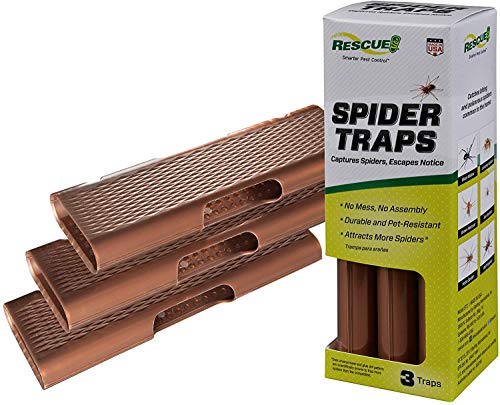
RESCUE! spider traps provide a simple, ready-to-use option with a two-sided design for extended life. Place them along wall paths, entryways, and perimeters where spiders commonly travel. The two-sided glue dots effectively extend each trap’s lifespan, delivering more utility from a single product while reducing the need for frequent replacements. This option can be valuable in high-traffic living spaces and rooms with limited corner clearance where a larger trap may be impractical.
Buying Guide: Key Purchase Considerations
- Non-toxic formulations: Glue traps that rely on adhesive rather than insecticides reduce chemical exposure for households with children and pets. Look for products marketed as non-toxic or pesticide-free.
- Trap size and surface area: Larger or dual-sided traps increase catch potential in rooms with higher spider activity. Consider a mix of standard and larger boards to cover both narrow pathways and wide surfaces.
- Placement strategy: Early mapping of known harborage points—corners, behind appliances, closets, and along baseboards—improves effectiveness. Pair traps with regular cleaning and decluttering to limit hiding spots.
- Maintenance cadence: Establish a routine for checking traps weekly in high-activity zones and monthly in low-traffic areas. Replace traps as soon as they reach full or near-full condition.
- Complementary methods: Glue traps work best when combined with clean, dry environments and targeted aerosols in specific hard-to-reach cavities. Use sprays only as directed and avoid spraying near food areas or on traps themselves.
- Durability and lifespan: Some traps claim year-round effectiveness; verify product claims against your environment, including humidity and temperature. In damp spaces, ensure traps stay adhered and visible.
When selecting a brown recluse trap system, consider the room layout, the number of inhabitants in the home, and the spider activity level. A multi-product approach—combining standard traps, giant boards, and strategic placements—often yields better long-term results than relying on a single solution. Regular monitoring remains essential to assess progress and adjust the plan accordingly.