Deep dents require a filler with strong adhesion, easy sanding, and reliable drying times. This guide reviews top body fillers suited for deep dent repairs on metal, fiberglass, and composite surfaces, helping you pick a kit that minimizes labor while delivering a smooth, paint-ready finish. We evaluate versatility, set time, sanding speed, and long-term durability to support durable auto body or home repair projects.
Summary of Selected Products
- Evercoat Body Shop Pro-Grade, Fast-Drying Filler (13 Fl Oz) – Superior adhesion, quick sand times, versatile adhesion to aluminum and fiberglass.
- 3M Bondo Original Filler (14 oz can) – Classic, reliable two-part formula with fast cure for same-day repairs.
- Bondo Original Formula Filler (1.57 lb can) – Broadly compatible for dents, dings, scratches with quick cure.
- Roberlo Maxifill Superior Lightweight Filler (3 L + Hardener) – Microspheres technology for faster sanding and rust inhibitors.
- Evercoat Pro-Grade Reinforced Filler (13 Fl Oz) – Short fibers for added strength, suitable for wound-like repairs on various substrates.
Evercoat Body Shop Pro-Grade Filler
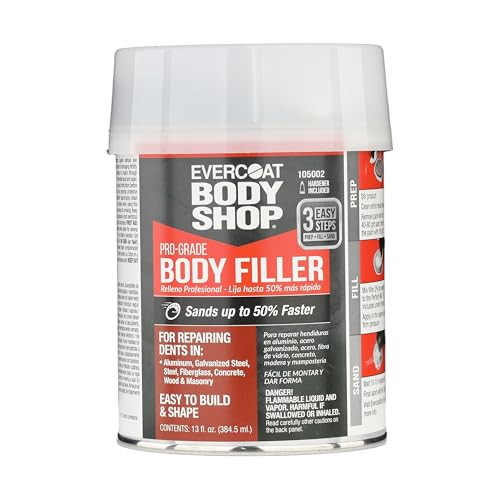
Evercoat’s Pro-Grade Body Shop filler is designed for professionals and DIYers who want reliable performance across multiple substrates. The filler is lightweight and easy to mix, shaping into dent contours with minimal effort. Its fast-drying formula reduces wait times, enabling faster project turnover. The product adheres well to aluminum, galvanized steel, steel, fiberglass, concrete, wood, and masonry, making it a versatile option for automotive and home repairs. The included hardener helps ensure a proper cure at standard temperatures, contributing to a smooth, paintable surface once sanded.
Practical use notes: For deep dents, apply in thin layers and allow each layer to reach tack before adding the next. The formula sands relatively quickly compared to heavier fillers, but surface prep is still essential. This filler pairs with compatible primers and topcoats for durable, long-lasting repairs. Ideal for workshop settings where quick turnarounds matter and repairs span metal and composite materials.
Bondo Body Filler, Original Formula

The original Bondo filler remains a staple for dent repairs, offering a reliable two-part system that spreads smoothly and cures quickly. This particular product is noted for handling dents, dings, holes, large rusted areas, and scratches on vehicles. The lightweight compound is designed for easy mixing, and it cures in roughly 20 minutes, enabling same-day repairs in many cases. Its broad adhesion profile makes it suitable for automotive bodies and other rough surfaces where a strong, smooth base is essential before coating.
Application tips: Prepare the damaged area by cleaning and sanding to a profile that promotes bonding. Mix the filler with the included hardener in the recommended ratio, apply in stages, and sand progressively for a refined surface. Consider priming with a dedicated automotive primer after the finish is dry for best paint adherence.
Bondo Original Formula Filler

This 1.57 lb Bondo option emphasizes ease of use for medium to large dent repairs. Its two-part system is designed to spread smoothly and sand easily, helping users achieve a uniform base layer before primer. The filler cures in about 20 minutes, enabling rapid progress on repair projects. Its adhesion profile supports a wide range of substrates, including metal and masonry, making it a flexible choice for both automotive work and small home repair tasks.
Best practices: For deep dents, build up the filler gradually with multiple thin layers rather than a single thick application. After curing, scuff the surface with a fine-grit sandpaper before applying primer. If color matching is needed, follow with a suitable topcoat to match the vehicle or surface finish.
Roberlo Maxifill Superior Filler Kit

Roberlo Maxifill is designed for easy sanding and paintable finishes, featuring microspheres technology to reduce sanding time by up to 40%. The 3-liter filler kit includes a hardener, delivering a complete solution for small to medium dent repairs across aluminum, steel, zinc, galvanized, and fiberglass. Its advanced rust-inhibition properties help protect repaired areas, contributing to longer-lasting results. The kit’s packaging is sized for convenient storage in workshop spaces where multiple projects are underway.
Pros and considerations: The lightweight composition aids manual application and reduces fatigue during long repairs. The rust inhibitors add value in scenarios where surface exposure to moisture is possible. While easy to sand, users should still follow recommended curing and sanding sequences to avoid bond failure on challenging surfaces.
Evercoat Pro-Grade Body Filler Kit
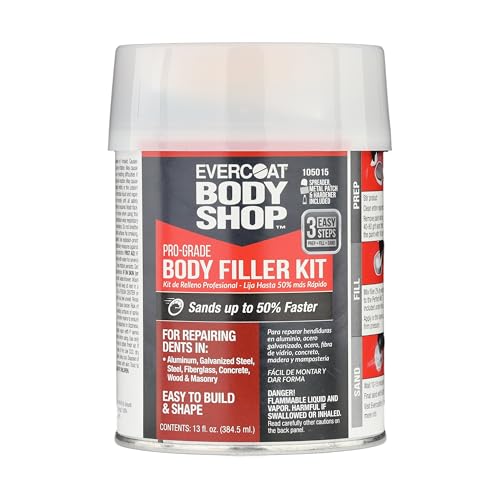
The Pro-Grade filler kit from Evercoat emphasizes rapid drying and strong adhesion for multidirectional repairs. It’s designed to work well on aluminum, fiberglass, steel, and wood, with a focus on vertical holds to reduce sag on upright surfaces. The 13-ounce filler is formulated to sand 50% faster than standard fillers, a notable productivity boost for busy shops. The included hardener supports consistent cures under typical workshop conditions, contributing to uniform surfaces that paint well after finishing primer.
Usage guidance: Apply in light coats, letting each layer firm up before topping with the next. For deep dents, consider using a reinforcing approach by combining with compatible reinforcing fillers or fabric for larger areas, ensuring the final layer remains easy to sand and shape before priming.
Evercoat Pro-Grade Reinforced Filler
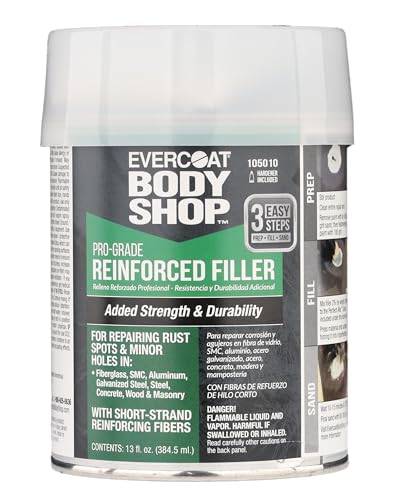
This reinforced filler adds short reinforcing fibers to boost strength, especially for rust spots, minor holes, or bond lines. It’s versatile across fiberglass, steel, aluminum, concrete, wood, and masonry, making it a practical choice for repairs that require additional durability. The formula aims for smooth mixing and easy contouring, with a finish that sands to a shop-smooth surface suitable for priming and painting. The reinforcing fibers help resist cracks that can occur on flexible or high-stress areas.
Best-use scenarios: Choose reinforced filler for repair jobs where rigidity and long-term durability matter, such as patches near weld seams or large dents in structural zones. Always follow curing times and final sanding steps to ensure optimal adhesion of primer and topcoat.
Buying Guide: Key Purchase Considerations
- Substrate compatibility: Metal, aluminum, steel, fiberglass, or masonry each respond differently to fillers. Choose a formula with broad adhesion if you’re repairing across multiple materials.
- Drying and sanding speed: Fast-drying fillers save time, but ensure you have enough working time for your project. Consider fillers that advertise faster sanding for efficiency on larger repairs.
- Strength and reinforcement: For deeper dents or areas subject to stress, reinforced fillers or those with short fibers improve durability and reduce cracking on weld lines or bond areas.
- Rust inhibition: Some fillers include rust inhibitors, which is beneficial for older vehicles or repairs exposed to moisture. This can extend the life of the repair.
- Kit contents and finish quality: Kits that include hardeners and multiple components provide a complete solution. Evaluate whether additional products are needed (primer, basecoat, topcoat) for a seamless finish.
- Application and finish: Look for fillers designed to reduce sanding time, while still delivering a smooth, paint-ready surface. Read user reviews for real-world performance and ease of use.
- Storage and shelf life: Consider product packaging and storage requirements. Some items have a longer shelf life than others, important for infrequent repairs.
- Cost per repair: While not a price comparison, assess how many dents you expect to repair and estimate the cost per repair based on the kit capacity and the number of repairs it accommodates.
When selecting a body filler for deep dents, balance speed, adhesion, and durability against project scale and substrate variety. For automotive work, a two-part system with a reliable hardener typically yields best results, especially when planning a durable finish after priming and painting. For home repairs, ease of use and sanding efficiency are often the deciding factors, particularly in visible areas where paint match matters.