The indoor ant problem is common, especially with sugar-rich trails that invite both visible workers and hidden colonies. This article highlights top indoor options designed to target black ants and other nuisance species, combining fast-acting formulas with long-lasting efficacy. Each product section includes practical placement tips and expected timelines to help you compare approaches and choose the right solution for your space.
| Product | Brand | Key Benefit |
|---|---|---|
| TERRO Ant Killer Bait Stations T300B | Terro | Liquid bait that targets colonies |
| Ortho Orthene Ant Killer Ant Bait | Ortho | Kills queen and colony |
| Raid Ant Killer Baits | Raid | Ready-to-use bait traps |
| Combat Indoor and Outdoor Ant Killing Gel | Combat | Gel for cracks and crevices |
| Raid Max Liquid Ant Bait | Raid | Pre-filled liquid bait stations |
TERRO Ant Killer Bait Stations T300B

Terro’s liquid bait stations are designed for indoor use and attract a range of sweet-eating ants. The bait system works by delivering a palatable liquid that workers carry back to the colony, which helps reduce visible activity and address hidden nests. New activity often decreases within days as foraging ants share the bait with the queen and other colony members. The 12-station package provides broad coverage for kitchens, pantries, and entryways where ants commonly form trails. For best results, place stations along baseboards, near water sources, and in areas with persistent ant presence. Consider monitoring activity and replenishing bait as consumption occurs.
Ortho Orthene Ant Killer Ant Bait
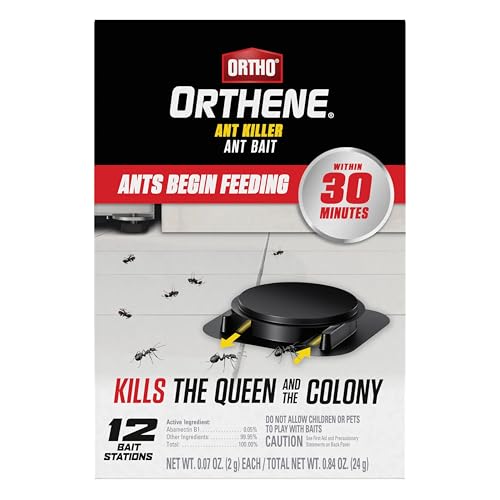
Ortho Orthene Ant Killer focuses on a colony-wide approach by aiming to reach the queen and interfere with the colony’s reproductive cycle. The bait stations are designed for placement along commonly used routes—baseboards, corners, cabinets, along pipes, and near food storage areas. Typical results show a decline in ant activity within 3 to 7 days as foraging workers transfer the bait to the nest. This method is particularly effective for persistent colonies and can be used in kitchens, bathrooms, and other areas prone to ant incursions without requiring extensive cleanup, though ongoing monitoring is advised to ensure continued control.
Raid Ant Killer Baits

Raid’s Ant Killer Baits use a pre-packaged bait trap system designed to be placed where ants feed. The package supports up to three months of protection by ensuring ants ingest the bait, then return to the colony to spread the active ingredient. This approach targets hidden nests and queens while limiting exposure to household pets and children when traps are placed in safe, out-of-reach locations. For best results, deploy all traps at once and maintain a steady supply until activity declines, then rotate locations to intercept new foraging routes.
Combat Indoor and Outdoor Ant Killing Gel

Combat Gel targets ants through direct application in cracks and crevices where they travel and nest. The gel kills the entire colony by ensuring ants transfer the active ingredient to other colony members. It’s suitable for both indoor and outdoor use, making it flexible for entry points such as door thresholds and window frames. The gel’s residue-free formula minimizes scent and keeps treatment discreet, which is beneficial for spaces with children or pets when applied in non-accessible locations. Reapply as needed if foraging trails reappear.
Raid Max Liquid Ant Bait

Raid Max Liquid Ant Bait uses pre-filled stations to deliver liquid bait directly to foraging ants. The bait is designed to attract a wide range of ants and to be carried back to the nest, where it can transfer to other ants and larvae. This approach can help reduce colony size over time and provide ongoing protection against new incursions as long as bait stations remain in place and replenished as needed. Ideal placement includes along ant trails, near entry points, and in areas where food residues attract pests, such as kitchens and pantries.
Buying Guide: Key Purchase Considerations
- Target strategy: Choose bait that suits your situation—contact-kill (sprays), colony-targeting baits, or granular gels for cracks and crevices. Liquid baits and gel baits excel at colony-wide control, while traps offer ongoing protection with minimal mess.
- Ant species and behavior: Some products are labeled for a broad range of ants; if you know you have a specific species, select a product with proven efficacy against that species.
- Placement and accessibility: Position stations along baseboards, near trails, and entry points. Keep bait away from children and pets, and follow label directions for safe placement.
- Duration and monitoring: Most products require days to weeks to show full colony impact. Plan for ongoing monitoring and replenishment to sustain control.
- Safety and odor: Choose odorless or low-odor formulations if you’re sensitive to scents. Non-drip gels and low-scent baits reduce disruption in living spaces.
- Indoor vs. outdoor use: Some products are versatile for both settings; prioritize indoor-specific options for kitchens, living rooms, and hallways to minimize exposure to pets and food areas.
- Pet and child safety: Look for child-resistant designs or stations that limit access. Always keep bait stations out of reach and follow the product’s safety guidelines.
- Long-term maintenance: Ant control often requires repeated applications or a combination of methods. A two-step approach (baiting plus surface treatment in cracks) can enhance success rates.
Tip: For best results, combine non-scented bait stations with an occasional exclusion strategy—seal gaps around doors and windows, fix moisture sources, and keep kitchens clean and free of food debris. Regular inspections help identify new trails and adapt bait placement quickly, reducing the chance of re-infestation over time.