Choosing the right basement waterproofing products can help prevent leaks, mold, and moisture damage. This guide compares top waterproof paints and sealants designed for basements, foundations, and below-grade walls. Each option offers a different balance of flexibility, adhesion, and durability to suit various surfaces and climates.
| Product | Brand | What It’s Best For |
|---|---|---|
| KILZ Basement and Masonry Waterproofing Paint | KILZ | Porous concrete and masonry walls, interior/exterior use |
| Liquid Rubber Basement and Foundation Repair Sealant (Black) | Liquid Rubber | Permanent waterproof membrane, active leaks, foundation repair |
| Rubber Liquid Waterproof Sealant (TUFINEIN, Black) | TUFINEIN | Flexible rubber coating for cracks and gaps |
| Rubber Liquid Waterproof Sealant (TUFINEIN, White) | TUFINEIN | Flexible coating for multi-surface waterproofing |
| KILZ 1-Part Epoxy Acrylic Concrete & Garage Floor Paint | KILZ | Basement floors, porches, driveways; durable, glossy finish |
Note: Each product listed has distinct advantages—some focus on flexible sealant membranes for active leaks, while others offer durable paints for finished or utility basement areas. Review surface preparation and application methods to maximize performance in your project.
KILZ Basement And Masonry Waterproofing Paint
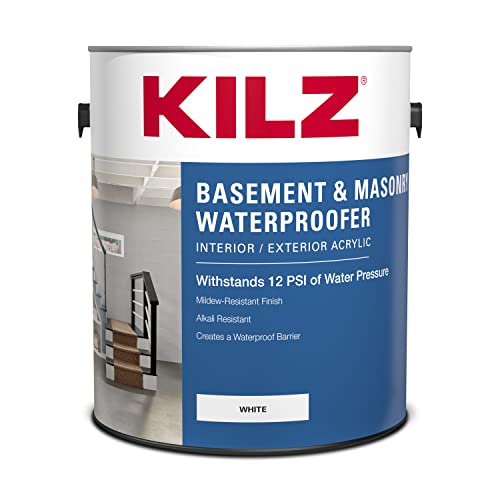
KILZ Basement and Masonry Waterproofing Paint is designed to waterproof and seal porous concrete and masonry surfaces both indoors and outdoors. The formulation forms a barrier against water infiltration and includes an alkali-resistant coating for long-lasting protection. It’s suitable for properly prepped and cured above- and below-grade basement walls, masonry walls, retaining walls, cinder blocks, stucco, and brick. It should not be used on floors or on walls with active leaks. Application recommendations include a high-quality nap roller, brush, or airless sprayer capable of specific PSI and tip sizes.
Key points:
- Interior/exterior use
- Seals porous surfaces; forms water barrier
- Not for floors or actively leaky walls
- Requires proper surface prep and curing
Liquid Rubber Basement And Foundation Repair Sealant

Liquid Rubber provides a permanent waterproof membrane ideal for basement waterproofing, foundation leak repair, and other applications. It offers up to 900% elongation, ensuring flexibility to move with temperature changes and substrate movement. This sealant system exceeds basic coatings by delivering complete basement waterproofing and compatibility with self-leveling concrete. It also functions as a crack filler and adheres to concrete, masonry, wood, metal, and foundation surfaces, making it suitable for DIY projects requiring durable water protection.
Key points:
- Permanent waterproof membrane
- 900% elongation for flexibility
- Seals leaks and moisture; supports foundation repair
- Compatible with self-leveling concrete
Rubber Liquid Waterproof Sealant (TUFINEIN, White)
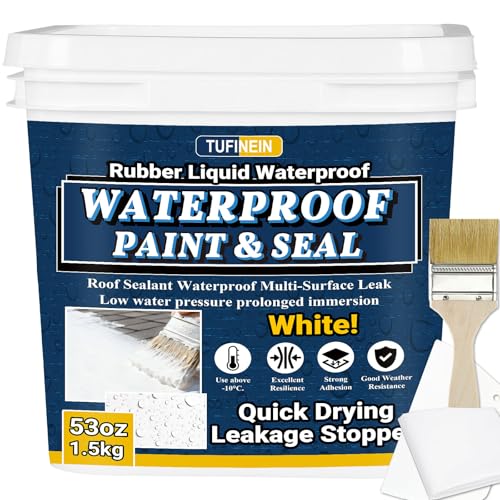
TUFINEIN’s white rubber sealant offers elasticity and extensibility, forming a flexible rubber layer within 2-4 hours. It provides lasting waterproof protection across multiple surfaces with strong adhesion and durability in extreme temperatures (-40 °C to 80 °C). While it’s suitable for basement walls, roofs, and various surfaces, it is not recommended for walking surfaces due to tackiness when cured. This product is ideal for sealing seams, cracks, and small gaps in basements and other structures.
Key points:
- Flexible, quick-drying rubber coating
- Wide temperature resistance
- Good adhesion on multiple surfaces
- Not ideal for walking surfaces
Rubber Liquid Waterproof Sealant (TUFINEIN, Black)

This black variant mirrors the white sealant in elasticity and temperature tolerance, delivering a flexible protective coating for basements, roofs, and other surfaces. It forms a durable membrane that helps prevent moisture intrusion, offering strong adhesion and resistance to aging. It shares the same 2-4 hour initial film formation window and is suitable for various non-walking surfaces requiring a robust rubber sealant.
Key points:
- Flexible black rubber coating
- Same elongation and cure profile as white version
- Excellent for basements and foundations
KILZ 1-Part Epoxy Acrylic Concrete & Garage Floor Paint

KILZ 1-Part Epoxy Acrylic Concrete & Garage Floor Paint delivers a durable, satin finish designed to resist tire pickup, scuffing, cracking, peeling, and fading. While marketed for basement floors, garages, porches, and driveways, it’s best applied to properly prepared porous surfaces. It’s not intended for vertical surfaces or areas with hydrostatic pressure or heavy forklift traffic, and is for residential use. This product provides a strong option for finished basement spaces or utility floors needing a robust, easy-to-clean coating.
Key points:
- Durable epoxy acrylic formula
- Interior/exterior horizontal surfaces
- Resists wear and weathering
- Not for hydrostatic pressure or heavy traffic
Buying Guide: Key Considerations For Basement Waterproofing
-
<li Surface type and condition: Determine if you’re sealing concrete, masonry, brick, or stone, and assess whether walls are actively leaking. Some products are designed for active leaks (membranes and sealants), while others provide a protective finish for finished spaces.
<li Flexibility vs. rigidity: Flexible sealants like Liquid Rubber products accommodate movement and hairline cracks, reducing future cracking. Rigid paints may crack if the substrate shifts.
<li Application method: Consider whether you’ll spray, roll, or brush. Some products specify specific equipment and nozzle sizes for best results; follow manufacturer guidelines closely.
<li Indoor air quality and odor: Some coatings have stronger odors or require ventilation during cure. Choose low-odor formulas if applying in occupied spaces.
<li Drying and cure times: Quick-drying options can speed up projects, but ensure proper curing before exposure to moisture or traffic. Some products need curing time before water exposure.
<li Compatibility with future remodeling: If you plan to install flooring or add finishes later, select coatings that won’t overly trap moisture or require difficult removal.
<li Finish and aesthetics: Epoxy/acrylic floor paints provide a durable finish but may not be flexible; sealants deliver waterproof protection but without the same decorative look.
<li Cost and coverage: Compare coverage per gallon and expected lifespan. Flexible membranes may cost more upfront but offer longer-term protection against leaks and movement.
<li Safety and ventilation: Review safety data sheets and ensure adequate ventilation during application and curing, especially in enclosed basements.
<li Maintenance: Consider how easy it is to clean and maintain the coated surfaces and whether future repairs are straightforward.