When protecting a basement, choosing the right sealer paint is essential for stopping moisture intrusion and preserving structural integrity. The following selections focus on waterproofing, crack resistance, and compatibility with common basement materials like concrete, masonry, and block. This guide pairs practical features with real-world applications to help homeowners compare options without relying on expensive professional services.
| Product | Brand | Type | Use |
|---|---|---|---|
| KILZ Basement and Masonry Waterproofing Paint | KILZ | Waterproofing paint | Interior/Exterior, above and below grade |
| Liquid Rubber Basement and Foundation Repair Sealant (1 Gal) | Liquid Rubber | Liquid rubber sealant | Waterproofing, crack repair |
| KILZ 1-Part Epoxy Acrylic Concrete & Garage Floor Paint (1 Gal) | KILZ | Epoxy acrylic concrete paint | Basement floors, porches, driveways |
| AMES BMX1WRG 1 Gallon Blue Max White | AMES | Liquid rubber waterproofer | Below-grade and interior waterproofing |
| Ames Block & Wall Liquid Rubber Waterproofer (1 Gal) | AMES | Liquid rubber coating | Basements and foundations |
Note: The products listed here are selected for common basement conditions, including porous concrete, cinder blocks, and masonry walls. Always prepare surfaces as directed by each product’s instructions and consider a test spot before full application.
KILZ Basement And Masonry Waterproofing Paint
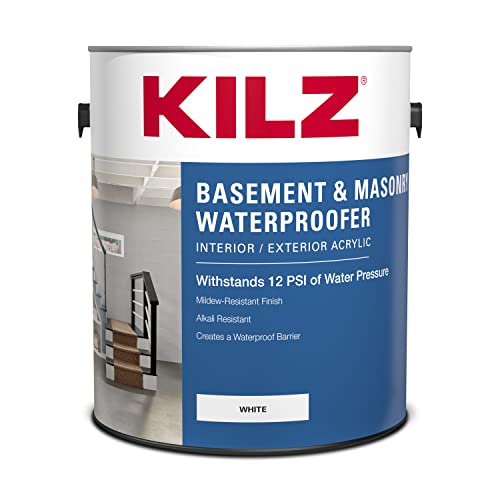
KILZ’s Basement and Masonry Waterproofing Paint is designed to seal porous concrete and masonry surfaces both inside and outside the home. Featuring nanotechnology, it forms a barrier to water infiltration while an alkali-resistant coating provides a durable and decorative finish. It should be applied to properly prepped and cured walls that are above or below grade. Not suitable for floors or walls with active water leaks. Application can be done with a high-quality roller, brush, or airless sprayer with the specified tip range. This product emphasizes waterproofing alongside a decorative finish for basement walls and other masonry surfaces.
Liquid Rubber Basement And Foundation Repair Sealant (1 Gal)

This 1-gallon Liquid Rubber sealant provides a flexible, waterproof membrane intended for basement waterproofing, foundation leak repair, shower liners, and planter boxes. It delivers high elongation (around 900%), enabling it to move with temperature changes and building shifts. It positions itself as part of a complete basement waterproofing system that goes beyond paint, offering robust protection against active leaks and moisture. It adheres to concrete, masonry, wood, metal, and foundation surfaces, and remains flexible in varying temperatures, making it suitable for DIY basement projects.
KILZ 1-Part Epoxy Acrylic Concrete & Garage Floor Paint (1 Gal)

Designed for durability, KILZ’s 1-Part Epoxy Acrylic Concrete & Garage Floor Paint is suitable for basement floors, porches, driveways, and pool decks. It resists hot tire pickup, abrasion, cracking, peeling, and fading, offering a satin finish with long-lasting protection. While primarily oriented toward horizontal concrete surfaces, it is not recommended for vertical surfaces or areas exposed to hydrostatic pressure. This makes it a strong option for concrete basement floors undergoing finishing or repainting in residential spaces, where a tough, easy-to-clean surface is desirable.
AMES BMX1WRG 1 Gallon Blue Max White

AMES Blue Max White is a high-adhesion elastomeric liquid rubber waterproofer designed for below-grade and interior applications. It forms an elastic membrane that expands and contracts up to 900%, helping to resist cracking and peeling as the structure moves. It adheres to concrete, wood, metal, and other common basement substrates, and can be brushed, rolled, or sprayed. This product emphasizes long-term flexibility and robust waterproofing in below-ground environments where moisture pressure is a concern.
Ames Block & Wall Liquid Rubber Waterproofer (1 Gal)
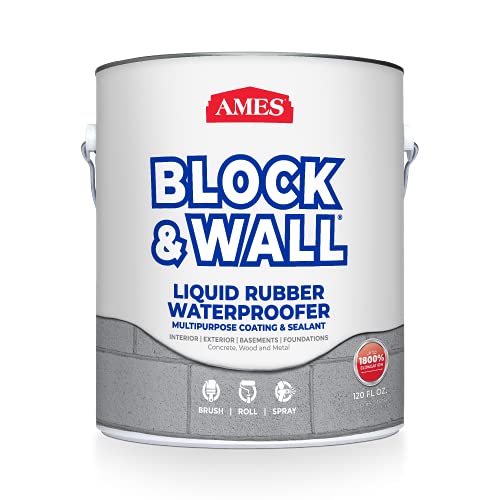
Ames Block & Wall is a white liquid rubber waterproof coating designed for basements and foundations. This 1-gallon offering is marketed for multi-surface use and focuses on preventing moisture intrusion at the structural interface where blocks and brick meet concrete. The product is lightweight and intended for interior and exterior basement applications, supporting a flexible seal that accommodates temperature-related movement.
Buying Guide
- Surface compatibility: Choose products specifically designed for concrete, masonry, and block to maximize adhesion and waterproofing performance. Some products emphasize flexible sealants for cracks, while others offer decorative coatings for walls and floors.
- Waterproofing vs. decorative finish: Decide whether you need a water barrier only, or a finish that also improves appearance. For basements with visible moisture, prioritize waterproofing membranes and sealants; for finished spaces, consider paint with waterproofing credentials.
- Application method: Consider rollers, brushes, or spray application. For large basement walls, spray or roller options may save time. Ensure the product’s recommended application method matches your equipment.
- Flexibility and movement: Basements experience shifting due to temperature and humidity. Elastomeric or flexible rubber sealants offer higher elongation (often 900%), which reduces cracking and failures over time.
- Preparation requirements: Surface prep is critical. Most products require cleaning, drying, and priming or curing. Follow curing times to ensure the coating adheres properly and lasts longer.
- Exposure and environment: Some products are not suitable for areas with active water leaks or hydrostatic pressure. In high-moisture zones, use robust waterproofing membranes and consider a professional assessment if leaks persist.
- Durability and maintenance: Epoxy-based floor paints provide abrasion resistance for basement floors but are less suited for walls. For long-term basement integrity, combine a water barrier on walls with a protective floor coating that resists scuffing and moisture.
- Cost and coverage: Calculate square footage and compare coverage per gallon. Some sealants require multiple coats, which affects overall cost and time to complete the project.
All products listed here offer various approaches to basement moisture control, from traditional paints to advanced membrane sealants. When selecting a solution, balance the specific basement conditions, desired finish, and maintenance expectations to choose the option that best protects and preserves your space.