Basements can be one of the coldest spaces in a home. A reliable baseboard heater provides steady warmth without bulky equipment or noisy operation. The following models are designed to fit into tight spaces, offer simple installation, and maintain comfortable temperatures in basement environments. This guide highlights five popular options, their core specs, and what to consider when choosing one for basement use.
| Product | Brand | Watts | Voltage | Type |
|---|---|---|---|---|
| Cadet F Series 48″ Electric Baseboard Heater | Cadet | 1000/750 | 240/208 | Standard Baseboard |
| Cadet F Series 72″ Electric Baseboard Heater | Cadet | 1500 | 120 | Standard Baseboard |
| Comfort Zone CZ600 750/1,500-Watt Baseboard Heater | Comfort Zone | 750/1500 | 120 | Dual Wattage |
| King 3K1207BW 750-Watt 120-Volt Baseboard Heater | KING | 750 | 120 | Aluminum Ribbon |
| Oylus Baseboard Heater With Fireplace — 1500W | OYLUS | 1500 | 120 | Baseboard + Fireplace |
Cadet F Series 48″ Electric Baseboard Heater
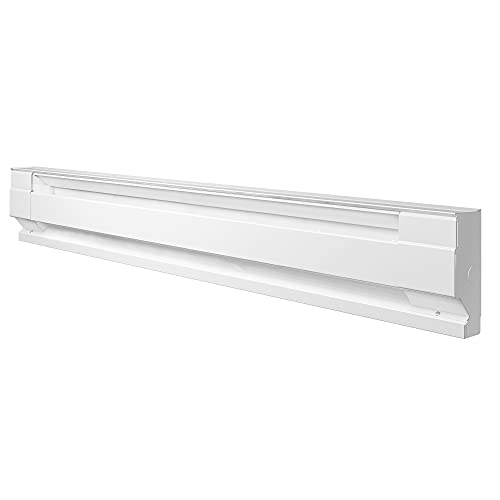
Cadet F Series 48″ baseboard heater offers robust heat output at 1000/750 Watts with multi-volt compatibility (240/208V). The unit is designed for adaptable installation with universal wiring and pre-punched knockouts at 1-inch intervals, enabling straightforward floor or wall mounting. A high-temperature safety shutoff adds a critical layer of protection, contributing to safer operation in basements where moisture and concrete walls require dependable equipment. This model suits small-to-medium basement rooms that need consistent warmth without occupying valuable living space.
Cadet F Series 72 Inch Electric Baseboard Heater

This 72-inch Cadet F Series model provides continuous warmth across larger basement spaces with 1500 Watts at 120V. Its design emphasizes safety and reliability, featuring a straightforward manufacturing approach from Cadet, a brand known for durable heating solutions. The unit is well-suited for longer wall runs in basements where a low-profile heat source can evenly distribute heat without obstructing furniture or storage. Installation is made easier by standard mounting options and clean, metal housing.
Comfort Zone CZ600 Baseboard Heater

The CZ600 provides dual wattage options (750W/1500W) to adapt to different basement zones and insulation levels. Its safety features include an overheat protection system and a no-assembly-needed design, simplifying installation in basements with limited workspace. The adjustable thermostat helps maintain consistent temperatures, reducing energy waste while ensuring comfort in cooler basements used as living spaces or storage areas.
King 3K1207BW 750-Watt Baseboard Heater

King’s 3K1207BW 750W baseboard heater is designed for 120V operation and can be legally hard-wired in many installations. Its aluminum ribbon fin element provides efficient heat transfer, while a full-length safety cutout adds protection. The unit is a practical fit for basements that require consistent, zone-specific heating along a wall without the need for bulky furniture rearrangements or portable heaters. The hard-wired configuration ensures a reliable, long-term heating solution in permanently used basement spaces.
Oylus Baseboard Heater With Fireplace
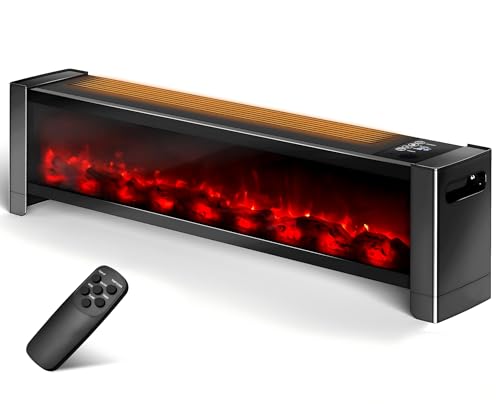
This 1500W Oylus model blends baseboard heating with a realistic fireplace effect. It provides robust warmth suitable for larger basement spaces while offering a 3D flame ambiance that can enhance a basement living area. The unit includes a built-in thermostat with multiple modes and a timer, plus tip-over and overheat protection for safety. This option is ideal for basements intended as recreational or living spaces where aesthetics and consistent heating must coexist with safety features.
Buying Guide: Key Considerations For Basement Baseboard Heaters
- Heat output and room size: Verify wattage matches the basement area. Larger spaces may require 1500W or multiple units for even distribution, while smaller basements can be adequately heated with 750W models.
- Voltage and wiring: Most homes use 120V or 240V circuits. In basements with limited electrical capacity, select models that align with available circuits or plan for electrical upgrades with professional installation.
- Mounting and space: Baseboard heaters are slim and unobtrusive, but ensure ample clearance for furniture, humidity exposure, and safe operation along walls. Pre-punched knockouts and universal wiring simplify installation.
- Safety features: Look for overheat protection, tip-over switches (for portable models or in high-traffic areas), auto shut-off, and durable end panels. In basements, damp environments may require more rugged construction and protective housings.
- Thermostat control: Built-in adjustable thermostats help maintain consistent temperatures, reduce energy waste, and adapt to fluctuating basement usage patterns.
- Noise level: Most baseboard heaters operate quietly, but some options emphasize silent or low-noise performance, which is beneficial in sleeping areas or home offices in basements.
- Maintenance and durability: Consider corrosion resistance and ease of cleaning, especially in basements with higher humidity. Durable housings and simple wiring reduce long-term upkeep.
- Design and aesthetics: Choose a model that blends with basement interiors, especially if the space doubles as living or recreation areas. White or neutral finishes commonly match most decor.
- Installation practicality: Universal wiring, wall-mount options, and floor mounting flexibility can shorten installation time and reduce costs.
- Energy considerations: For basement spaces used intermittently, a model with efficient heat transfer and smart thermostat compatibility can lower overall energy use.