Transform a basement space into a compact fitness zone with durable pull-up bars and supportive wall or joist mounts. This guide highlights five reliable options that deliver stability, versatility, and ease of installation for basement setups. Each choice prioritizes safety and comfort, from anti-slip grips to heavy-load capacities, so you can target multiple muscle groups without leaving home.
| Product | Brand | Load Capacity | Mount Type | Key Benefit |
|---|---|---|---|---|
| Fitarc Joist Mount Pull Up Bar, 42 in Wide | Fitarc | Not stated (heavy duty) | Joist Ceiling Mount | Wide grip options and sturdy spray-coated tubes |
| Firstlaw Fitness I-Beam Pull Up Bar | Firstlaw Fitness | 600+ LBS | I-Beam Bolt-On | Strongest I-beam design with multiple grips |
| Shnlie Joist Mounted Pull Up Bar | Shnlie | Up to 440 LBS | Joist Ceiling Mount | Heavy-duty steel with comfortable, anti-slip foam pads |
| HWOOUSA 36″ Heavy Duty Pull Up Bar | HWOOUSA | 600 LBS | Wall/Joist Mounted | All-in-one design with space-saving features |
| Upgraded-Joist Mounted Pull Up Bar | HWOOUSA | 800 LBS | Joist Mount | Adjustable height and multiple grip options |
Fitarc Joist Mount Pull Up Bar, 42 in Wide
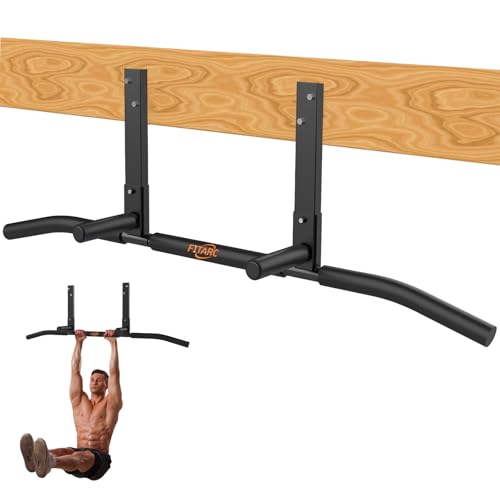
The Fitarc 42-inch joist mount pull-up bar is designed for basement installations with a heavy-duty tube structure and a spray-coated finish to resist wear. It aims to support a broad range of grip positions, enabling back, chest, arms, and shoulder development. The bar emphasizes a comfortable, non-slip handle built from high-density foam for extended workouts. This option suits spaces where ceiling mounting is not viable and where a wider grip improves range of motion and muscle activation.
Firstlaw Fitness I-Beam Pull Up Bar

The Firstlaw Fitness I-Beam Pull Up Bar uses a 1-1/4″ steel tube for maximum rigidity and is designed to fit I-beams from 3.5″ to 11″ wide. It is bolt-on, avoiding drilling, and supports multiple grip positions to target different muscle groups. This model is marketed as one of the strongest options for basement or garage setups, reinforcing stability with a welded-like feel and installation ease that appeals to builders or DIY enthusiasts seeking a long-term fixture.
Shnlie Joist Mounted Pull Up Bar

Shnlie offers a heavy-duty steel pull-up bar with a 440-lb capacity, featuring a sprayed coating to resist rust and corrosion. The handle includes six foam pads to improve grip comfort and reduce slippage during high-rep sets. The design emphasizes safety and durability for basement gym layouts, where ceiling height and space constraints require a compact, sturdy bar that still provides several grip options for diverse workouts targeting the back, core, and arms.
HWOOUSA 36″ Heavy Duty Pull Up Bar

This 36-inch model by HWOOUSA is built from 5mm alloy steel with full welding to maximize durability and supports up to 600 lbs. It offers multiple grip positions for full-body engagement, including wide, neutral, and hammer grips. The design emphasizes space efficiency for basement walls and rafter setups, while the included carabiners expand training options for suspension or resistance training.
Upgraded-Joist Mounted Pull Up Bar
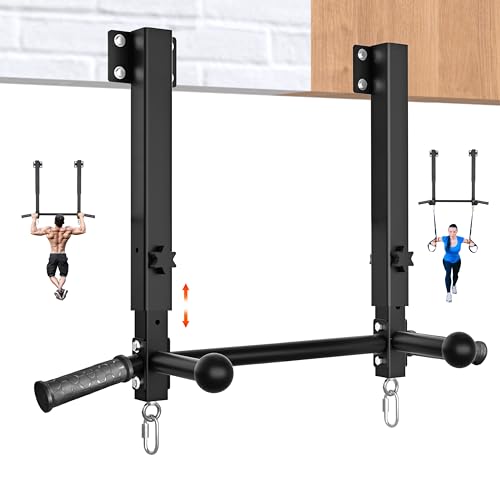
The Upgraded-Joist Mounted Pull Up Bar features an 800-lb load capacity and adjustable height, designed for basement installations with beam and rafter mounting options. It includes multiple grip configurations to accommodate various lifting styles and muscle groups. The build emphasizes robust construction and flexibility to adapt to ceiling heights and wall spaces in basements used as home gyms or multi-purpose rooms.
Buying Guide: Key Purchase Considerations
- Mount type and ceiling or beam compatibility: Ensure the bar fits your joists, I-beams, or mounting surfaces without drilling or with minimal structural alteration.
- Weight capacity and warranty: Pick a bar rated well above your current lifting goals to allow for progression and safety. Check for warranty coverage and customer support.
- Grip options and comfort: Look for multiple grip positions (wide, neutral, close, hammer) and padded or foam-coated handles to reduce hand fatigue during longer sessions.
- Space and installation: Measure your basement space and consider a wall- or ceiling-mounted design that minimizes obstruction in doorways and walking paths.
- Durability and finish: Choose bars with rust-resistant coatings and solid welding or bolted joints for long-term use in basement humidity or temperature fluctuations.
- Value-add features: Some bars include carabiners or suspension training compatibility, expanding exercise options beyond pull-ups and chin-ups.
When selecting a basement bar, balance stability, space, and grip versatility. For larger basements or higher ceilings, an I-beam or heavy joist-mounted bar with multiple grip positions offers robust performance. For compact rooms, a space-saving joist mount with a wide grip can deliver efficient upper-body workouts without crowding the floor space. Mixing a sturdy bar with a small wall anchor or beam option can also provide flexibility for evolving routines and shared-use spaces.