Ant problems at the kitchen counter demand fast-acting, reliable solutions that are safe for homes. This guide highlights five popular, Amazon-sold products designed to target common kitchen ants, kill colonies, and prevent re-infestations. Each pick focuses on indoor use, ease of placement, and actionable results, helping you choose the right approach for your space and lifestyle.
Summary Table of Chosen Products
| Product | Brand | Format | Key Benefit |
|---|---|---|---|
| TERRO Liquid Ant Bait Stations | Terro | Liquid bait stations, 12 count | |
| Raid Ant Killer Baits | Raid | Ant Bait Traps, 8 count | |
| Combat Indoor Ant Killing Gel | Combat | Gel, 27 g | |
| Catchmaster DEFIANT Liquid Ant Bait | Catchmaster | Liquid bait + stations, 1-year supply | |
| Ortho Orthene Ant Killer Bait | Ortho | Ant bait stations, 12 |
Terro Liquid Ant Bait Stations Review

Terro’s liquid bait stations are designed for indoor ant control by attracting workers who then carry bait back to the colony. This approach can reach multiple nest members, including those hidden from sight. The 12-count setup allows for strategic placement along baseboards, near entryways, and around kitchens where ants are most active. Users often notice reduced activity within days as the bait moves through the colony. The liquid format is especially effective for sugar-loving ants commonly found in kitchens.
Raid Ant Killer Baits: Long-Lasting Indoor Help

Raid’s bait traps are formulated to attract ants that hide in crevices and along walls, then transfer the bait to the colony. The product promises protection for up to three months and emphasizes placing all traps at once for maximum impact. This approach targets the entire colony by leveraging the ants’ natural foraging behavior, making it a solid option for kitchens with ongoing ant activity and where visible ants are just the tip of the problem.
Combat Gel For Quick Internal Ant Control

Combat Indoor and Outdoor Ant Killing Gel delivers rapid action by targeting entry points and crevices where ants travel. The gel form allows precise placement in cracks and hidden paths, which can be crucial for minimizing kitchen exposure while addressing both visible ants and hidden colonies. It’s particularly useful when ants frequent narrow gaps near cabinetry, pantry edges, and behind appliances, where baits may be less effective due to immediate consumer intrusions.
Catchmaster DEFIANT Liquid Ant Bait System

The DEFIANT system provides a year’s supply of liquid bait and four stacked stations. This setup aims to kill the queen and the colony by encouraging workers to share bait. It covers both indoor and outdoor spaces, which is helpful for kitchens connected to patios or entryways. The included stations are reusable, making it cost-effective over time for households facing persistent ant issues.
Ortho Orthene Ant Killer Bait for Colony Control
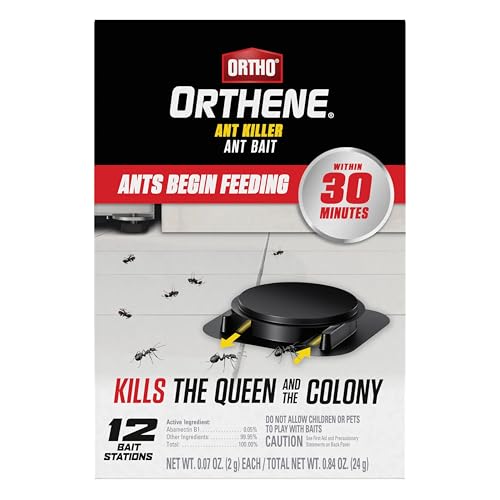
Ortho’s Orthene Ant Killer Bait focuses on eliminating ants by disrupting the colony’s dynamics. The bait stations are placed where scouting ants feed and share information with nestmates, helping to reduce visible activity in 3–7 days. This option suits homes where ants repeatedly appear along baseboards, near sinks, or in pantry corners, and it highlights the strategy of influence over direct killing in the short term.
Buying Guide: Key Purchase Considerations
Choosing the right ant killer for a kitchen counter requires balancing efficacy, safety, and practicality. Consider these perspectives:
- Active ingredients and target species: Some formulas are broad-spectrum and fast-acting, while others focus on social feeding and colony disruption. Identify the ants you’re dealing with (carpenter, sugar, ghost, etc.) and match the product type accordingly.
- Form factor and placement: Liquid baits, gels, and solid traps differ in how you deploy them. For countertops and tight spaces, gels and small bait stations can be less obtrusive, whereas liquids may spread more quickly through the colony.
- Time to results: Most products show activity reductions within days, with full colony elimination potentially taking weeks. Consider your tolerance for longer timelines if infestations are severe.
- Safety and pets: Pet-friendly and child-safe options are available. Always follow label directions, especially in food-adjacent areas like kitchens.
- Indoor vs. outdoor use: If ants travel from outside, consider products that also deter entry routes or are effective for both indoor and outdoor settings.
- Reusability and cost: Some systems provide year-long supplies or reusable stations, which can lower long-term costs in repeat infestations.
- Comprehensive strategy: Combining a bait system with surface treatments or preventive measures (sealing entry points, cleaning crumbs, storing food properly) often yields the best results.
Ant control effectiveness varies by environment, the ant species, and how consistently products are used. For kitchens, start with a bait-based approach that targets the colony and complement with routine cleaning to remove attractants. Tracking activity over a couple of weeks helps measure progress and decide when to adjust tactics.
Additional Perspectives: What To Expect In Real-World Use
Different households report varying experiences with these products. Some users notice rapid declines in ant trails and fewer sightings within a few days to a week, while others observe slower colony disruption. In cases of stubborn infestations, a combination approach—such as pairing bait stations with a gel or plant-based spray—can be more effective. Always read label instructions and safety data to ensure appropriate use around kitchens and food preparation areas.
Conclusion Excluded by Design
Disclaimer and Notes
All product details referenced are based on label information and product descriptions provided by the sellers. Results may vary based on household conditions, ant species, and application practices. This article aims to present objective options for indoor ant control suitable for kitchen counters.