Finding a reliable heater for a 20-gallon aquarium ensures stable temperatures for tropical fish, plants, and corals. The following selections are 100W-focused options commonly recommended for 20–40 gallon tanks, offering adjustable thermostats, submersible design, and user-friendly features. This guide presents five strong choices with tested safety features and easy visibility of temperature, helping you keep aquatic life comfortable and thriving.
| Product | Brand | Approximate Wattage | Tank Range |
|---|---|---|---|
| Tetra 26446 HT Submersible Aquarium Heater | Tetra | 100W | 10–30 Gallons |
| Orlushy Submersible Aquarium Heater (100W) | Orlushy | 100W | 10–20 Gallons |
| hygger Nano Aquarium Submersible Heater (100W) | hygger | 100W | 15–20 Gallons |
| FREESEA Aquarium Heater (100W) | FREESEA | 100W | 20–40 Gallons |
| NICREW 100W Aquarium Heater | NICREW | 100W | 10–20 Gallons |
Tetra 26446 HT Submersible Heater With Electronic Thermostat
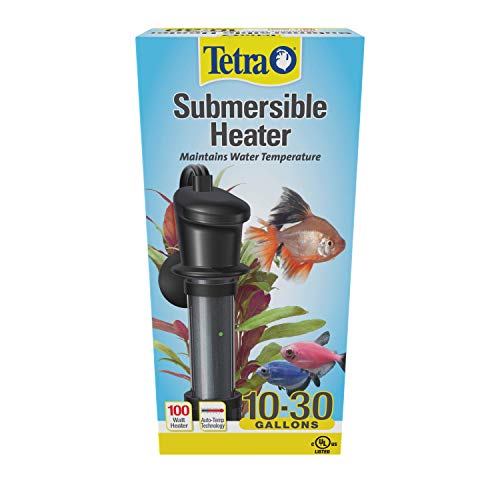
The Tetra 26446 HT features a submersible design and an electronic thermostat to maintain a steady 78 degrees Fahrenheit. Its indicator light shows when heating and when the heater is on standby, helping you monitor operation without direct water checking. This model is appropriate for habitats in the 10–30 gallon range, aligning with many community tanks that sit near the 20-gallon mark.
Orlushy 100W Submersible Aquarium Heater

Orlushy’s 100W heater is designed for 10–20 gallon tanks and includes two suction cups for secure placement. It features a temperature adjustment area and a robust quartz glass housing for freshwater and saltwater use. The unit emphasizes simple control and discreet placement within the aquarium, offering practical versatility for small to mid-sized setups.
hygger Nano 100W Aquarium Heater
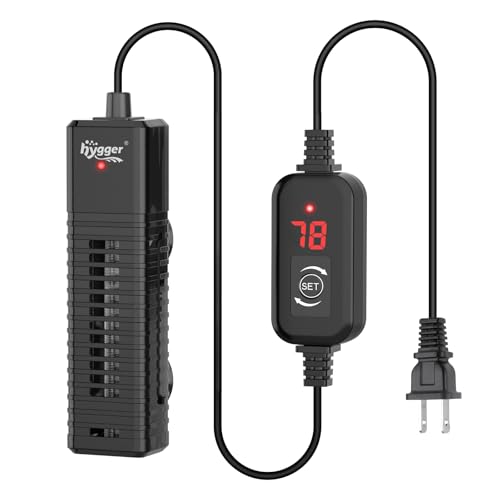
The hygger Nano 100W heater is compact (about 4.9 x 1.3 x 0.9 inches) with a low-profile design that hides in corners without disrupting the tank’s aquascape. It includes a real-time temperature probe, a ±2°F accuracy, and an alarm/reminder system for overheating and low water scenarios, enhancing safety in 15–20 gallon tanks. A built-in display helps users monitor temperature at a glance.
FREESEA 100W Aquarium Heater

FREESEA’s 100W model supports 20–40 gallon tanks and includes overheating and off-water protection. An external digital LED controller allows temperature adjustments from 64°F to 95°F with ±1°F precision, and the external readout displays current and set temperatures. The unit emphasizes a robust, submersible design with safety features suitable for varied freshwater and saltwater environments.
NICREW 100W Aquarium Heater

The NICREW model provides a temperature-adjustable external controller with memory and dual sensors for precise readings. It includes overheat protection that shuts off automatically if water exceeds 98°F (36°C), helping prevent dangerous temperature rises. This heater is well-suited for 10–20 gallon tanks, delivering reliable performance with straightforward control.
Buying Guide: How to Choose a 20-Gallon Aquarium Heater
- Wattage: For most 20-gallon tanks, 100W is typical. If you have a heavily planted or heavily loaded tank, consider a slightly higher wattage within the 100W range to maintain stable temperatures.
- Thermostat type: Digital vs. analog thermostats affect precision and ease of use. Digital displays with external controllers offer clear readings and easier adjustments from outside the tank.
- Submersible design: All options here are submersible, which provides even heat distribution. Ensure the heater is fully submerged per the manufacturer’s guidelines.
- Safety features: Look for overheat protection, off-water or low-water warnings, and impact-resistant materials like quartz glass and robust housings to reduce breakage risk.
- Temperature range and accuracy: Most chosen models offer wide ranges with ±1–2°F accuracy. Consider a model with external controls for precise daily adjustments.
- Tank environment: Saltwater tanks may require heaters with stronger corrosion resistance; freshwater setups commonly use standard components. If you keep tropical species, a steady 76–80°F is typical, so a reliable thermostat is essential.
- Maintenance and accessibility: Models with external controllers or easy-read indicators help with routine checks. Ensure cords and components are durable for long-term use.
- Installation and visibility: A compact, low-profile heater reduces visual footprint in the aquarium, while clear indicators help verify operation at a glance.